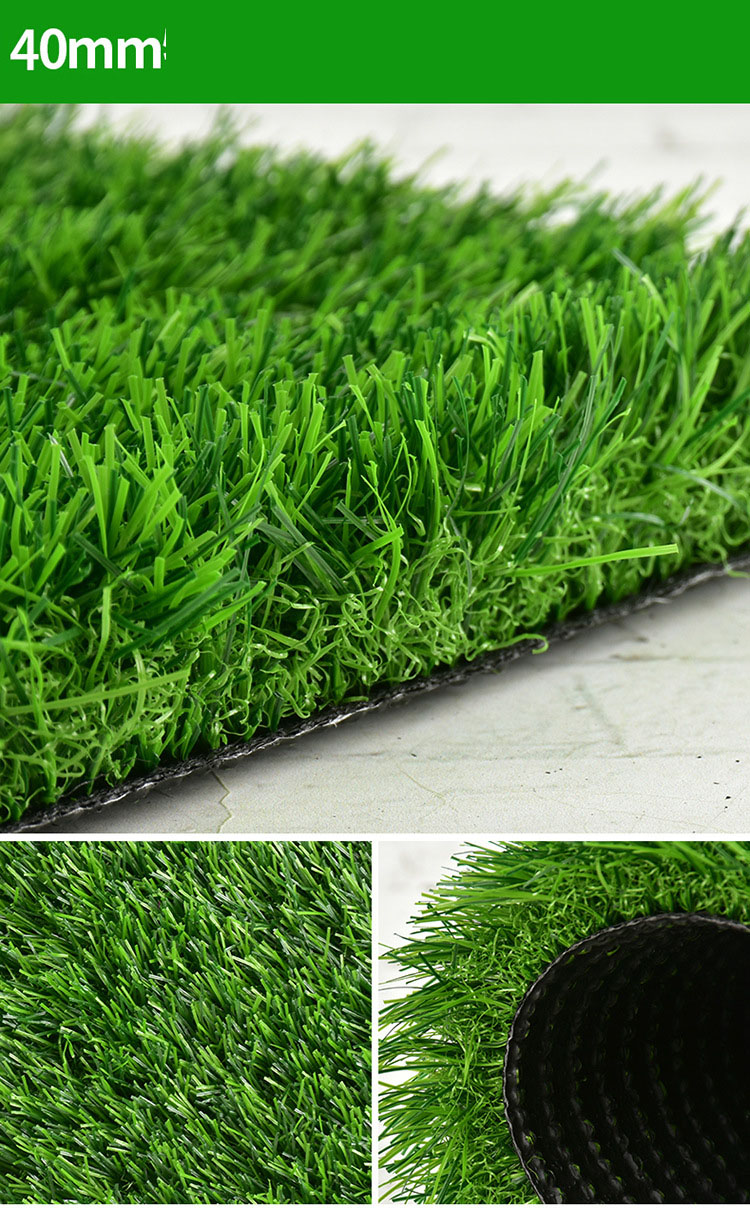
The Great Divide: Water Consumption in Turf
The necessity of maintaining refreshing water has come to be one of the most defining environmental challenges of the smooth generation, significantly as weather difference intensifies drought cycles throughout sizeable swaths of the globe. Within the home and business landscape, few parts symbolize one of these meaningful, constant drain on instruments as the conventional lawn. When evaluating **man made grass** to **pure grass** in terms of water usage, the contest isn't always near; it's far a binary competition between **perpetual, excessive-amount intake** and **occasional, minimum use**. The transition from a residing environment to a artificial carpet essentially alters the landscape's relationship with the water source, representing arguably the unmarried surest component in prefer of adopting turf alternatives in arid or drought-prone areas.
# The Conservation Triumph of Artificial Turf: Near-Zero Requirements
The dialogue of water use shifts wholly while bearing in mind **man made grass** due to the fact that the turf is chemically inert and non-dwelling. The core organic need—evapotranspiration—is **entirely eradicated**.
No Biological Need, No Perpetual Drain
Artificial turf, made from artificial fibers like polyethylene, polypropylene, and nylon, does no longer transpire, nor does it require water to facilitate nutrient uptake. This immediately removes the a whole lot of enormous quantities of gallons according to year required for subsistence. The water intake for an synthetic lawn is for that reason relegated to two minimal classes: **install** and **upkeep**.
1. **Installation Water:** A minor volume of water may be used in the course of the base instruction section to hose down and compact the mixture sub-base underneath the turf. This is a small, **one-time value** it is negligible while amortized over the product's lifespan, which quite often exceeds 15 to 25 years.
2. **Maintenance Water:** This is the simply recurring water value, and it's miles minimal. Unlike the systemic, complete-side watering required for usual grass, artificial turf merely calls for water for precise initiatives:
* **Cleaning:** Occasional rinsing is imperative to scrub away airborne dirt and dust, pollen, and debris, or to sanitize locations dirty by means of pets. This is an **episodic** program, most often some occasions a month, regarding a standard hose and a fraction of the amount of a regular irrigation consultation.
* **Cooling:** In really warm climates, man made turf can hold warm. A transient, superficial spray of water can give **evaporative cooling** to temporarily drop the surface temperature, making it greater mushy to be used. Again, that's a special, quick-duration program, a long way less than what might be needed to save a garden alive.
Comparing the usage is in many instances expressed in dramatic possibilities: switching from natural grass to man made turf can bring about **water reductions of 90% to ninety nine%** over the lifetime of the installing. In areas stricken by extended drought, this conservation determine seriously is not just an aesthetic desire however a fundamental **water management tool**.
---
# Summary of Water Implications
| Feature | Natural Grass | Artificial Grass | Water Usage Implication |
| :--- | :--- | :--- | :--- |
| **Primary Need** | Evapotranspiration (Biological) | None (Synthetic) | **The single preferable distinction.** Natural grass is a steady, prime-volume user. |
| **Volume Required** | Thousands of gallons weekly/every year | Minimal rinsing for cleaning/cooling | **Artificial turf saves 90-ninety nine% of time-honored water extent.** |
| **Application** | Systemic, typically inefficient sprinkler irrigation | Episodic, distinctive hosing for cleaning | Natural grass watering is more likely to waste (runoff, evaporation). |
| **Embedded Cost** | Continuous water for fertilizer/pesticide manufacturing | One-time water use for production | Long-term use of pure Artificial grass for football manufacture grass dramatically outweighs the only-time manufacturing expense of synthetic turf. |
The conclusion is unambiguous: inside the evaluation of water utilization, **man made grass is overwhelmingly the greater water-clever alternative**. It stands as a very important tool for very own, group, and municipal water conservation ideas, fantastically as water shortage turns into the brand new normal in many constituents of the world. While the debate around turf most commonly encompasses different environmental aspects—including warm retention, infill supplies, and eventual disposal—its superiority within the realm of water conservation is the important motive force for its accepted adoption.
Given the immense big difference in intake, which element—open air of water usage—do you sense is the maximum pressing environmental predicament when identifying among typical and artificial turf?